Not what you're looking for? CLICK HERE INSTEAD
The response to the question below was authored by Marc Mitnick DPM
side of foot pain, similar to bunion?
by Luke
(Oregon)

|

|

|
Hello,
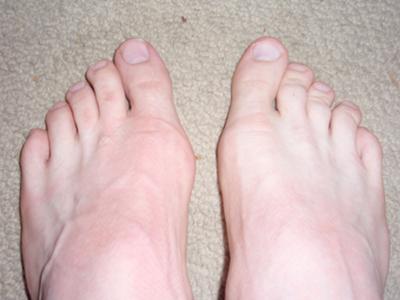
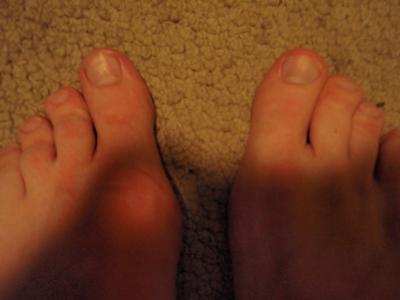
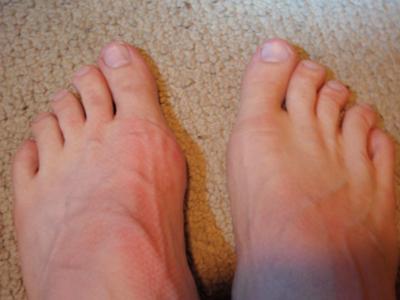
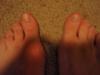
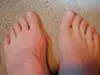
I am having some "bunion" issues that were caused by trauma. I was in a relatively minor skateboarding accident in early April. I landed on my foot in the accident, and heard a pop noise from my foot. When I got up and tried to walk, it was quite difficult and I thought I might have broken a bone in my foot. I took my shoe off, examined my foot a bit and determined it was fine to walk on. I had a great deal of pain, but had it x-rayed later that day and it was confirmed that there was no break. At that time, I was told it was likely just a hyperextension, and after about a week of icing and resting the foot, it felt good enough to run on. I ran a half marathon later that month and had little issues. However, I noticed that putting weight on the ball of my left (injured) foot caused a good amount of pain, and sometimes I could repeat the popping sensation I felt when I originally injured it. So, activities that involved sprinting or things like pushups are quite painful. I had my foot checked out and x-rayed again recently, and the doctor told me it was a bunion, therefore not caused by my accident but by "genetics" or "narrow shoes". I know for a fact that this injury was caused by my skating accident, because it was not there before and has been there ever since. I'm an athletic 19 year old male who wears wide skate shoes and I don't have any prevalent bunion history in my family. My injury (to me) feels and looks a little more like a minor
Thanks!
Luke
Hi Luke,
People can have bunions and not have pain, so based on your story I think your pain is all trauma induced in spite of the bunion. Apparently, you did injure the bunion joint.
In all the treatments you have undergone for your foot, you do not mention rest and immobilization. If the joint was traumatized and there is no broken bone then you have soft tissue damage. You have to allow the soft tissue to heal which is difficult on feet since you are walking all the time.
I would suggest you try immobilizing the area for a while, limit your athletic activity, take some more anti-inflammatory medication and see what happens.
Marc Mitnick DPM
Comments for side of foot pain, similar to bunion?
|
||
|
||

ADDITIONAL REFERENCES
University of Rochester Medical Center
American Academy of Pediatrics
Columbia University Department of Rehabilitation
Illinois Bone and Joint Institute
University of Maryland Medical Center
If you happen to live in the New York - New Jersey area and would like to visit our office
|
|
To make an appointment online or for directions to our office click Dr. Marc Mitnick.
DISCLAIMER: The purpose of this site is purely informational in nature. It is not intended to diagnose, treat or cure any medical condition. This information is not a substitute for advice from a medical professional. Please consult your healthcare provider for accurate diagnosis and treatment. The information presented here may be subject to errors and omissions.
SITE LAST UPDATED: MAY 2026



Recent Articles


-
Vitamin D impact on health
Feb 06, 23 07:17 PM
Researchers are suggesting that the effectiveness of Vitamin D in fighting and preventing disease is predicated on a persons body mass index (BMI). The thinner the person the greater the positive impa… -
Foods to speed up healing
Feb 01, 23 02:41 PM
One of the best ways to help yourself heal faster after surgery is to eat well. Getting the proper nutrition will provide your body with the essentials it needs to promote healing. Here is a suggestio… -
Cancer and Type 2 Diabetes
Jan 25, 23 04:52 PM
An article revealing that older type 2 diabetics have a higher incidence of cancer then non-diabetics. It is suggested that cancer may surpass CVD as the number one cause of death in older diabetics. -
Does glucosamine or MSM reduce arthritis pain?
Jan 22, 23 01:41 PM
A good review of the possible benefits to taking glucosamine, chondroitin or MSM for arthritis. Always beware of the possible side effects of over the counter supplements. -
shin splints
Jan 18, 23 05:12 PM
A great review on the various causes of shin splints, along with treatment options. -
Whats new in skin cancer?
Jan 15, 23 08:32 PM
A presentation of newer skin protection combinations in an effort to better protect the skin from the hazards of sun exposure. -
Causes and risk factors of warts
Jan 14, 23 05:02 PM
A good review of the causes of warts and protective measures you can take to prevent developing them. -
Do chronic wounds need to be dressed daily?
Jan 11, 23 02:18 PM
Because of supply chain shortages as well as staffing shortages particularly during the pandemic, many institutions extended the time between dressing changes for chronic wounds. Is this really the be… -
Food choices that raise your risk of type 2 diabetes
Jan 08, 23 10:07 AM
A good review of how blood sugars can become elevated and the harm that can do. Certain food groups have a tendency to raise your blood sugars and should be avoided. -
Outcome stats from Scarf bunionectomy
Jan 03, 23 03:04 PM
The Journal of Foot and Ankle Surgery recently reported a meta analysis of outcomes in 1583 Scarf bunionectomies that met their inclusion criteria. Adverse events did not seem to be any better or wors…