heel neuroma
AUTHOR: Marc Mitnick DPMREVIEWED BY: Podiatric Medical Review Board
home --> heel neuroma
WHAT IS A HEEL NEUROMA
Although I have a more extensive discussion of heel pain on another page on this site, I thought I would devote a page to a condition that is not often recognized in the diagnosis of heel pain.
A heel neuroma also known as Baxter's nerve is basically a nerve entrapment that occurs amongst the inflammation that is found in heel pain.
Most patients will present to the doctors office with a complaint of heel pain on the bottom of the heel. After the interview, examination, x-rays and any other tests the doctor may perform, a diagnosis of plantar fasciitis or heel spur is usually made. There are other less common conditions that may also cause heel pain.
What I have noticed in people where the diagnosis of plantarfasciitis or heel spur is made is that in a good percentage of these people there is also involvement of the “calcaneal nerve” which is a small branch that comes off the larger nerve. This nerve is located on the inside part of the heel and travels underneath the heel.
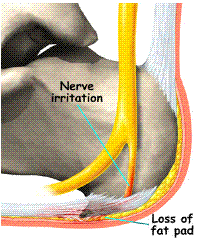
Generally, from the constant pounding that the heel takes both in walking and exercise the nerve is traumatized. This condition can also be brought on faster by a degeneration of the fat pad on the bottom of the heel.
In those cases where the heel pain gets worse as the patient ambulates a diagnosis of entrapped nerve pain has to be considered. Additionally, symptoms such as burning or numbness in the heel are also suggestive of this condition.
The picture below demonstrates an inflamed lateral plantar nerve. Baxter's nerve is actually the first branch that comes off the lateral plantar nerve (not pictured).
|
HEEL NEUROMA DIAGNOSIS
The diagnosis is usually made by pressing on the inside (medial) portion of the heel. If there is pain along with the pain on pressing on the bottom of the heel a diagnosis of heel neuroma can be made in conjunction with plantarfasciitis/heel spur. Unfortunately, there is no test presently available that will make the diagnosis of neuroma alone. It is generally made on clinical presentation. Some experts recommend nerve conduction studies, but I personally feel there can be a lot of misleading results because the nerve in question is so small and the nerve distribution in the heel can vary from person to person.
So in addition to treating the heel pain on the bottom of the foot the enlarged nerve must also be treated, otherwise most patients will only experience modest relief.
TREATMENT FOR HEEL NEUROMA
Strapping the heel in an effort to keep all the fat underneath the heel can be helpful.
Avoid backless shoes- The patient should wear only shoes with a back on them (no sandals, mules, slides, etc.) because the closed in shoe will help keep the fat underneath the heel.
4% denatured alcohol injections- Medical treatment in my practice consists of multiple, as many as seven, sometimes eight injections of 4% denatured alcohol which attempts to sclerose or deaden the nerve. I have found this treatment to be very effective in at least 80 percent of the cases.
Deadening the medial calcaneal nerve- Taking this concept one step further many clinicians now attempt to sclerose (deaden) the medial calcaneal nerves regardless as to whether or not they suspect a heel neuroma. Particularly in patients where a diagnosis of plantar fasciitis has been made and the patient has not responded to conservative therapy. The thought process here is that by just sclerosing the nerves that transmit the pain felt in the heel, the overall pain experienced by the patient will be dramatically reduced.
This treatment concept is of particular significance in patients who have been having heel pain for more than a couple of months.
Today, we as foot specialists make a distinction between acute plantar fasciitis and chronic plantar fasciitis. Plantar fasciosis otherwise known as chronic plantar fasciitis is a more difficult condition to remedy than the acute form of plantar fasciitis, mainly because in the chronic form, the ligament is assumed to have scarred making conservative care less effective. Thus by sclerosing the nerves that transmit heel pain, the patient becomes much more comfortable while other measures can be undertaken to reduce the inflammation of the plantar fascial ligament itself.
heel neuroma surgery
In instances where conservative care fails, then surgical removal of the affected nerve is indicated. This is a soft tissue procedure that may be performed on an out patient basis. The problems associated with this type of surgery is 1. actually being able to find the nerve through meticulous dissection and 2. avoidance of scar tissue around the remaining nerve, which could lead to continued symptoms
The point to take away from this article is that if you are suffering from heel pain and have had treatment that does not seem to be making the pain go away discuss the possibility of a heel neuroma with your doctor.
REFERENCES
The Journal of Foot and Ankle Surgery
Want more information? CLICK HERE


Recent Articles


-
Vitamin D impact on health
Feb 06, 23 07:17 PM
Researchers are suggesting that the effectiveness of Vitamin D in fighting and preventing disease is predicated on a persons body mass index (BMI). The thinner the person the greater the positive impa… -
Foods to speed up healing
Feb 01, 23 02:41 PM
One of the best ways to help yourself heal faster after surgery is to eat well. Getting the proper nutrition will provide your body with the essentials it needs to promote healing. Here is a suggestio… -
Cancer and Type 2 Diabetes
Jan 25, 23 04:52 PM
An article revealing that older type 2 diabetics have a higher incidence of cancer then non-diabetics. It is suggested that cancer may surpass CVD as the number one cause of death in older diabetics. -
Does glucosamine or MSM reduce arthritis pain?
Jan 22, 23 01:41 PM
A good review of the possible benefits to taking glucosamine, chondroitin or MSM for arthritis. Always beware of the possible side effects of over the counter supplements. -
shin splints
Jan 18, 23 05:12 PM
A great review on the various causes of shin splints, along with treatment options. -
Whats new in skin cancer?
Jan 15, 23 08:32 PM
A presentation of newer skin protection combinations in an effort to better protect the skin from the hazards of sun exposure. -
Causes and risk factors of warts
Jan 14, 23 05:02 PM
A good review of the causes of warts and protective measures you can take to prevent developing them. -
Do chronic wounds need to be dressed daily?
Jan 11, 23 02:18 PM
Because of supply chain shortages as well as staffing shortages particularly during the pandemic, many institutions extended the time between dressing changes for chronic wounds. Is this really the be… -
Food choices that raise your risk of type 2 diabetes
Jan 08, 23 10:07 AM
A good review of how blood sugars can become elevated and the harm that can do. Certain food groups have a tendency to raise your blood sugars and should be avoided. -
Outcome stats from Scarf bunionectomy
Jan 03, 23 03:04 PM
The Journal of Foot and Ankle Surgery recently reported a meta analysis of outcomes in 1583 Scarf bunionectomies that met their inclusion criteria. Adverse events did not seem to be any better or wors…
