diabetic foot pain
AUTHOR: Marc Mitnick DPM
home --> diabetic foot pain
HOW DOES DIABETES AFFECT THE FEET
The diabetic foot including diabetic neuropathy and peripheral vascular disease can have serious outcomes.
Estimates run as high as 26 million Americans suffer from diabetes, both diagnosed and undiagnosed. Furthermore 25 percent of people with diabetes will develop a foot ulcer during their lifetime. Over half of these ulcers will become infected and require hospitalization and that 20 percent of these infections will result in amputation. 1
Appropriate foot care is one of the most overlooked aspects of the diabetic’s daily regimen. The feet along with the eyes, heart, and kidneys all have the potential for serious consequences in a disease that many do not take seriously and choose to ignore until it is too late to reverse the devastation that the disease can create.
symptoms of diabetic foot pain
As the disease relates to the foot, two major events occur as the disease progresses:
NEUROPATHY-many diabetics eventually lose sensation in their feet. This is known as diabetic neuropathy.
Autonomic neuropathy The simplest and earliest type neuropathy that is seen in diabetics (or patients unaware that they are diabetic) is seen in many cases as nothing more than dry skin usually accompanied with athletes foot. The skin on the bottoms of the feet particularly in the heel area will be very dry and scaly. The problem here is that if the condition is not identified properly, it can lead to breakdown of the skin and infection.
Sensory neuropathy Neuropathy which presents itself as relentless burning, tingling or numbness in the diabetic foot. The problem with neuropathy is multifaceted. With lack of sensation on the bottom of the diabetic foot, diabetics are at more risk for stepping on something, such as a broken piece of glass in the kitchen, and not even knowing it. The area then can become infected and at that point if the patient’s blood sugars are not under control and the circulation to the area is compromised, the body is unable to heal the infection and in many cases this scenario can lead to amputation. In fact, diabetes is the major factor in over 50 percent of amputations performed in the United States each year.
Another problem with neuropathy can be the relentless feeling of burning, tingling or numbness that is not alleviated by anything the diabetic does. It is the equivalent of tinnitus or constant ringing in the ears. Diabetic neuropathy usually occurs in both feet; neuropathic symptoms in only one foot is usually suggestive of a cause other than diabetes.
There are various prescription medications on the market for the diabetic foot with neuropathy all with varying degrees of success. Right now, Lyrica is probably the most popularly prescribed medication for diabetic neuropathy.
Recently, research has centered around a nutritional supplement which has been shown to be helpful in treating the pain of neuropathy without offering any of the side effects of prescription medication. Below is a blurb that appeared in the February 2007 issue of LifeExtension Magazine.
"Researchers report that alpha-lipoic acid improves symptomatic diabetic polyneuropathy, a painful condition of the nerves that afflicts many diabetics.
|
Motor neuropathy In this situation, elevated blood sugars will affect the nerves that innervate the muscles of the foot and lower leg and will cause changes in the way the muscles function. This abnormal function may lead to a more rapid onset of hammertoes and bunions as well as other arthritic changes in the feet.
PERIPHERAL VASCULAR DISEASE The other diabetes related factor to the feet is peripheral vascular disease. Over time, diabetes causes the arteries going into the feet to essentially become clogged and in doing so reduces the blood flow into the feet. This creates various problems, the most common being the inability of the tissue of the feet to get adequate nutrition. The skin becomes dry, thin, scaly; we lose the fat on the bottom of the feet, the bones become demineralized. This then makes the foot more susceptible to infection and difficulty in walking.
Adequate blood flow is necessary to the feet in order to help heal wounds. If a person cuts themselves or steps on a broken piece of glass, we need adequate blood flow to the area to bring nutrients to repair the wound. In a diabetic, this can be a problem due to lack of circulation.
CONSEQUENCES OF THE DIABETIC FOOT
Charcot foot A further deterioration of the diabetic foot as a result of diabetic neuropathy is known as a Charcot foot. This basically is breakdown of the feet due to an inability of the patient feeling the ground that he or she walks on. For example, non diabetics walking on bumpy terrain will “feel” the uneven pressure on their feet and adjust their gait in order to compensate. A diabetic foot with diabetic neuropathy, on the other hand, will not be able to “perceive” the uneven terrain and instead the foot will experience abnormal pressure in certain areas. This abnormal stress to the diabetic foot eventually causes the joints of the feet to breakdown. This in turn creates an abnormal functioning foot and because of the change in architecture of the foot, creates abnormal bony pressure points against the ground and certain parts of the patient’s shoes. This abnormal pressure can lead to tissue breakdown and eventually ulceration.
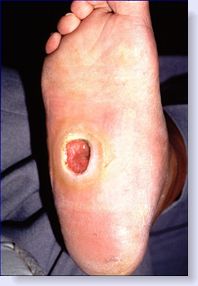
Diabetic foot ulcer
Below is a picture of a diabetic foot ulcer
|
definition of diabetic foot ulcer
Too much pressure from walking on that part of the foot, plus not enough circulation to the area along with elevated blood sugars caused this ulcer to form. An ulcer is essentially a discontinuity of skin. Once they occur they can be very difficult to close. It is not uncommon for diabetic foot ulcers to take years to close and in some cases they never close. This condition should be considered a medical emergency and immediate medical care should be initiated.
Infection Because a diabetic foot ulcer is an “opening” in the skin, the diabetic foot is much more susceptible to infection, either infection in the soft tissue or because of the close proximity to the underlying bone, an infection directly into the bone known as osteomyelitis. Bone infections are much more difficult to treat than soft tissue infections, many times requiring surgical intervention to remove the diseased portion of bone. Once the foot architecture has been changed due to surgery it can become much more difficult for the patient to walk.
Gangrene and amputation Of even more dire consequence is the fact that a diabetic foot ulcer in the presence of very poor circulation may lead to gangrene (death of the surrounding tissue) usually beginning in the toe area, and in these instances many patients go on to amputation.
Interestingly enough, since diabetes affects circulation particularly in the heart and feet, current guidelines recommend lowering LDL (bad cholesterol) through the use of statins in diabetics, because the disease is considered a "coronary artery disease equivalent", in other words, increases the potential for heart attacks.
It was then postulated that if the use of statins improves circulation through the heart, would it also do the same in the feet of diabetics resulting in a lower incidence of amputation in the lower extremity.
Over a period of five years 83,953 patients were evaluated. One group was on statins, another group was on non-statins and the third group was given a placebo. The results of the study revealed statin users were between 35%-43% less likely to suffer a lower extremity amputation. Individuals on non-statins had the same rate of amputation as the placebo group.2
PROTECTING THE DIABETIC FOOT
management of diabetic foot
Control your blood sugars No diabetic should take their disease for granted and should be proactive in their approach to their diabetes. The closer a person’s blood sugars are kept to normal on a daily basis, the less damage the disease can do. This is more the case in adult onset diabetes (Type II). So, managing one’s blood sugars is job number one. It is important to mention, however, that good blood sugar control only delays neuropathy, meaning as time goes on diabetic neuropathy will worsen in most diabetics.

|
I think it is important to make a few comments regarding Metformin which is probably the most prescribed diabetic drug for type II diabetics. The drug has been around for years with a high safety profile. It is generally prescribed for type II diabetics who are overweight. It has been found that after about four months of continuous use, Metformin has been shown to cause a vitamin B deficiency. This of course will adversely affect neuropathy, making it worse. So, supplementation with a vitamin B complex might not be a bad idea.
Examination of diabetic foot As far as the feet go, a diabetic should also do the following: inspect their feet daily, both visually and by rubbing their hands along the bottom of their feet, feeling for anything that may not feel normal. Anything questionable should be brought to the attention of their foot specialist, immediately. For older individuals who do not bend very well, placing a mirror on the floor and lifting your foot over the mirror is a good way to visually inspect your feet.
Moisturize your feet The feet should be hydrated daily to keep the skin soft. For most people, a good hand cream will work fine. As previously stated, diabetics tend to have drier skin then the general population and thus the skin is more prone to breaking down. The best cream for diabetic foot? One that is applied multiple times per day. It is not so much what cream you use, but how often you use it.
Proper daily hygiene includes washing the feet well with soap and water, including in between the toes, then drying them very well. Application of a good hydrating lotion is recommended immediately afterward. This is especially important in the winter months when skin in general gets dry due to low humidity in the air. Diabetics are affected even worse by the dry air. If the skin, particularly the heels get to dry, they may be prone to cracking and fissuring which once again opens the door for infection.
One point worth mentioning is that many of my patients tell me they soak their feet regularly, many using epsom salt. Unless there is an open wound of some sort with drainage, you should never routinely use epsom salt as it does nothing but dry out the skin. There are many good foot soak products on the market which will hydrate rather than dry. Additionally, a diabetic should never soak their feet in hot water especially when the circulation is compromised. The hot water will cause the skin to breakdown. Tepid water is a much better choice.
Proper fitting shoes are very important. Diabetics should wear non constricting shoes, as shoes that are too tight will cause unnecessary pressure points on the feet which can break down. In an effort to avoid pressure points many patients will go out and buy larger shoes. There is a fallacy with that logic. Shoes that are too big will cause the feet to have excessive motion within the shoe which will also create friction and eventually breakdown of the skin. For those diabetics on Medicare, the program offers what is known as the "Diabetic shoe program". Assuming there is documented evidence that the feet have undergone some changes due to diabetes, the patient is eligible for one pair of shoes and three pair of inserts each year. Your foot specialist will fit you for shoes and order the proper supports for your particular foot type.
Along with a good pair of shoes the diabetic should also have a good pair of orthotics to support the feet. When there is neurological diminishment to the foot and the patient cannot really "feel" the ground the bony architecture of the foot will begin to breakdown. A Charcot foot is a foot that has undergone a bony breakdown which then makes the diabetic even more susceptible to ulceration. An orthotic, therefore, supports the foot and fights the forces causing the foot to breakdown.
One of the easiest ways to protect the foot in diabetes is through the use of proper socks. Believe it or not, some socks may be harmful to the diabetic. A sock specifically designed for diabetics can go a long way in protecting the foot.
No bathroom surgery Diabetics should never perform what we call “bathroom” surgery. If there is something on the foot that is of concern, it should immediately be brought to the attention of a foot specialist. Trying to cut out an ingrown nail or trim a corn are examples of conditions that are better left to the experts.
Earlier this year the American Diabetes Association in their Standards of Medical Care in Diabetes 2006 came out with new foot care recommendations. Basically it is a proactive approach in assessing the vascular and neurological status of diabetic patients. In my office we have begun doing COMPREHENSIVE DIABETIC FOOT EXAMS. This is a painless examination, which will be done on a yearly basis. In this exam we do a noninvasive vascular study and a standard neurological exam. One of the neurological tests we perform is the Semmes-Weinstein test which is a simple test done by touching the bottom of the patient's foot in multiple places with a monofilament wire. Because the wire bends, if the foot is touched with the wire straight, it is assumed there will be equal pressure on all test sites. Consider its simplicity, it is a very good indicator of diabetic neuropathy.
February 2011 update The Journal of Vascular Surgery in a recent review of the literature and studies found that the Semmes-Weinstein monofilament wire is a good predictor of potential ulceration and amputation in the diabetic population. Researchers from the Journal found nine relevant studies which totaled over 11,000 patients with diabetes. The study concluded that patients with a positive Semmes-Weinstein result, were 2.5 times more likely to develop a diabetic ulcer than those patients with a negative Semmes-Weinstein test. This group was also 1.5 to 15 times more likely to have a lower extremity amputation.
The Semmes-Weinstein test is a simple, painless test that determines a diabetic's sensitivity on the bottom of his or her foot. By placing a monofilament wire at different positions on the bottom of the foot, the clinician can determine if there is any neuropathy present. In a reverse situation, performing this test on all patients can sometimes identify a patient who may be diabetic but was unaware of it.
In addition, we do a review of what diabetic patients should do and not do to their feet. The total exam takes about 45 minutes.
When the test is repeated next year and every year thereafter we will be able to determine if there has been any worsening in the vascular or neurological status. If so, we can then refer the patient out for further workup. The idea behind this is to find potential problems before they manifest themselves as ulcers, non-healing infections or gangrene because in many instances the first time we realize there is a vascular or neurological problem is when the diabetic patient presents to the office with a severe foot problem.
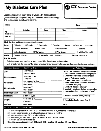
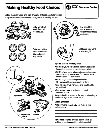
I recently attended a diabetes symposium at the world renowned Joslin Clinic. Below are two handouts from that lecture that you may printout and use. Just click them for an enlargement in .pdf format.
The first is entitled "My Diabetes Care Plan" which allows you to keep track of your diabetes medication, your daily blood sugars, blood work and medical exams you should have on a regular basis and information on when you should call your health care provider.
The second handout is entitled "Making Healthy Food Choices" which gives you helpful hints on the right food types and amounts of food a diabetic should be eating along with when you should eat.
1. Fitzgerald, Ryan, "Diabetes Watch", Podiatry Today Sept. 2013, pg.14
2. Statin Use and Lower Extremity Amputation Risk in Nonelderly Diabetic Patients
Sohn MW, et al. (Hines VA Hospital, Hines, IL; Northwestern University, Chicago, IL; Loyola University Stritch School of Medicine, Maywood, IL; University of Illinois at Chicago, Chicago, IL)
J Vasc Surg. 2013 Dec;58(6):1578-1585.e1
REFERENCES
Want more information? CLICK HERE
UPDATES TO THE DIABETIC FOOT
12/14/2022 The American Diabetes Association released their 2023 "Standards of Care in Diabetes." Every year since 1989, the ADA releases an update to the standards of care of the diabetes care team.
The update includes more then 100 new recommendations including the latest clinical advancements in diabetic management. Among them are pharmacological advancements in blood sugar control as well as holistic approaches to management such as "patient first" language making it easier for a diabetic to better understand his/her disease and ways to help themselves better manage the condition.
The document was composed by a multidisciplinary team of 20 experts from the US, including physicians, nurse practitioners, certified diabetes care and education specialists, registered dietitians, pharmacists, methodologists, and others.
11/21/2022 FDA approves first-ever type 1 diabetes delaying drug Tzield (teplizumab-mzwv). Tzield, an injectable drug, contains two drugs that may have the ability to push back the onset of Type 1 diabetes (T1D) in both children and adults. In individuals with Type 1 diabetes the pancreas is no longer able to produce enough insulin to regulate the intake of glucose. This glucose overload is what eventually leads to organ damage through the body.
Tzield was approved under the designation of Priority Review and also of Breakthrough Therapy from the FDA. This drug was redeveloped by the biopharmaceutical company ProventionBio and consists of teplizumab-mzwv.
The medication is not without risks. One risk is a reduction in lymphocytes which may lead to severe infections in some patients. The drug may also increase the release of cytokines in the body which can lead to hyper-inflammation resulting in multi-organ dysfunction.
11/20/2022 Herberto Valdez MD, an endocrinologist with Baptist Health South Florida, recently discussed who should be screened for pre-diabetes or diabetes.
In the United States today roughly 37 million Americans are diabetic, both Type 1 and Type 2. It is estimated that another 96 million have pre-diabetes where their fasting blood sugars are typically over 100 while their HgA1c may range between 5.7 and 6.4.
Dr. Valdez goes on to explain risk factors for diabetes along with ways to prevent or mitigate Type 2 diabetes. He warns that pre-diabetes can be asymptomatic, but damage to your body may already be hapening.
Certain risk factors for diabetes include people over age 45, your ethnicity such as African-American or Hispanic or American Indian. Having a family history of diabetes, beight overweight and lack of exericse may also promote diabetes.
Anyone with a concern for diabetes should read this article and then go get tested.


Recent Articles


-
Vitamin D impact on health
Feb 06, 23 07:17 PM
Researchers are suggesting that the effectiveness of Vitamin D in fighting and preventing disease is predicated on a persons body mass index (BMI). The thinner the person the greater the positive impa… -
Foods to speed up healing
Feb 01, 23 02:41 PM
One of the best ways to help yourself heal faster after surgery is to eat well. Getting the proper nutrition will provide your body with the essentials it needs to promote healing. Here is a suggestio… -
Cancer and Type 2 Diabetes
Jan 25, 23 04:52 PM
An article revealing that older type 2 diabetics have a higher incidence of cancer then non-diabetics. It is suggested that cancer may surpass CVD as the number one cause of death in older diabetics. -
Does glucosamine or MSM reduce arthritis pain?
Jan 22, 23 01:41 PM
A good review of the possible benefits to taking glucosamine, chondroitin or MSM for arthritis. Always beware of the possible side effects of over the counter supplements. -
shin splints
Jan 18, 23 05:12 PM
A great review on the various causes of shin splints, along with treatment options. -
Whats new in skin cancer?
Jan 15, 23 08:32 PM
A presentation of newer skin protection combinations in an effort to better protect the skin from the hazards of sun exposure. -
Causes and risk factors of warts
Jan 14, 23 05:02 PM
A good review of the causes of warts and protective measures you can take to prevent developing them. -
Do chronic wounds need to be dressed daily?
Jan 11, 23 02:18 PM
Because of supply chain shortages as well as staffing shortages particularly during the pandemic, many institutions extended the time between dressing changes for chronic wounds. Is this really the be… -
Food choices that raise your risk of type 2 diabetes
Jan 08, 23 10:07 AM
A good review of how blood sugars can become elevated and the harm that can do. Certain food groups have a tendency to raise your blood sugars and should be avoided. -
Outcome stats from Scarf bunionectomy
Jan 03, 23 03:04 PM
The Journal of Foot and Ankle Surgery recently reported a meta analysis of outcomes in 1583 Scarf bunionectomies that met their inclusion criteria. Adverse events did not seem to be any better or wors…